

THE SABOTAGE OF DEMOCRACY
The people of Myanmar has been fortunate to experience freedom only for a brief period of 10 years.The sabotage of elected government of Myanmar by the military junta was being witnessed by the world nations with astonishment.
The elections for Myanmar were conducted amidst Covid-19 pandemic on November 8, 2020. The results showed landslide victory for National League for Democracy (NLD) led by Aung San Suu Kyi against Union Solidarity and Development (USDA) led by the military’s proxy, the main opposition party. Post elections USDP raised many allegations of electoral frauds against NLD and the ethnic parties too were unhappy with the NLD assuming powers.The refusal to accept the electoral outcome can be understood as the immediate cause of the breakdown of democracy Myanmar.
Days before the swearing in of elected representatives before the Parliament , on 31st January 2021, the State Counsellor of Myanmar , Aung San Suu Kyi and President U Win Myint were intimidated with a gun and arrested along with other elected representatives by the military coup launched by the Commander-in -Chief, Min Aung Hlaing. This is not the first time the military is usurping democratically elected government. In 1990 , when NLD came victorious in elections akin now , the army brutally dealt with the elected officials and imprisoned many of them accompanied by harassment and torture. This was the tool often used to disregard people’s mandate.
HISTORICAL BACKGROUND OF MYANMAR AS A POLITICAL UNIT
The Anglo-Burmese wars between British empire and the Konbaug dynasty, fought during 1824-85 consolidated British rule over whole of Myanmar. Burma, as called by British rulers for Myanmar, was made a province of India in 1886 with Rangoon as its capital.The British rule economically drained the nation, but the oppressive rule was not unopposed.By twentieth century,many nationalist movements were started. After the world war II ,Burma was liberated with even more deepened ethnic divisions.The first independent Prime Minister was U Nu who was unable to deal with growing ethnic tensions, insurgency and corruption.To resolve the crisis, the military was by U Nu to form caretaker government from 1958 to 1960..In 1960,elections were conducted, which resulted in the formation of a civilian government under U Nu, but again the prevailing conflicts deteriorated and national integration unattainable.This led to a military coup on 2nd March 1962.From 1962 to 1974 ,Myanmar witnessed direct military rule and from 1974 to 1988, it was a phase of constitutional dictatorship. The second military coup was on 18th September, 1988 that brought back the direct military rule till 30th March,2011. In 2015 elections were conducted and NLD assumed office of power with Aung San Suu Kyi as the State Counsellor of Myanmar.
HUMANITARIAN CRISIS IN MYANMAR
Post military coup on 31st January 2021 ,hundreds of thousand pro-democratic demonstrators were on streets demanding restoration of democracy.But the response to these peaceful resistance movements were brutal suppression.
Since Feb 6,2021 civilians from every walks of life like students,bankers,lawyers etc were on streets to protest the unfortunate breakdown of democracy. The recent inhumane act of military to gun down its people on Armed Forces Day was pure infringement of right to peaceful protest and rule of law.Also official sources says that more than 100 protesters were killed. Many nations including India expressed their concerns.
Amidst the repressive and barbaric acts of the regime , the measures to curb Covid-19 has been derailed which poses a great threat to the health and life of people of Myanmar.If the relentless harm inflicted upon democracy is continued, the world nations might witness Rohingyan crisis like situation.
REPERCUSSIONS ON INDIA DUE TO THE UNFOLDING VIOLENCE IN MYANMAR
India shares border with Myanmar which makes India vulnerable to the spillover effect of the developments.The first and foremost is the influx of refugees who fear persecution in Myanmar.Indian states of Mizoram ,Manipur, Nagaland and Arunachal Pradesh shares its boundary with Myanmar and the refugee influx is largely to these states particularly to Mizoram from the Chin state of Myanmar with which Mizoram has deep ethnic ties.There is a 510 km porous border between Mizoram and the Chin state.
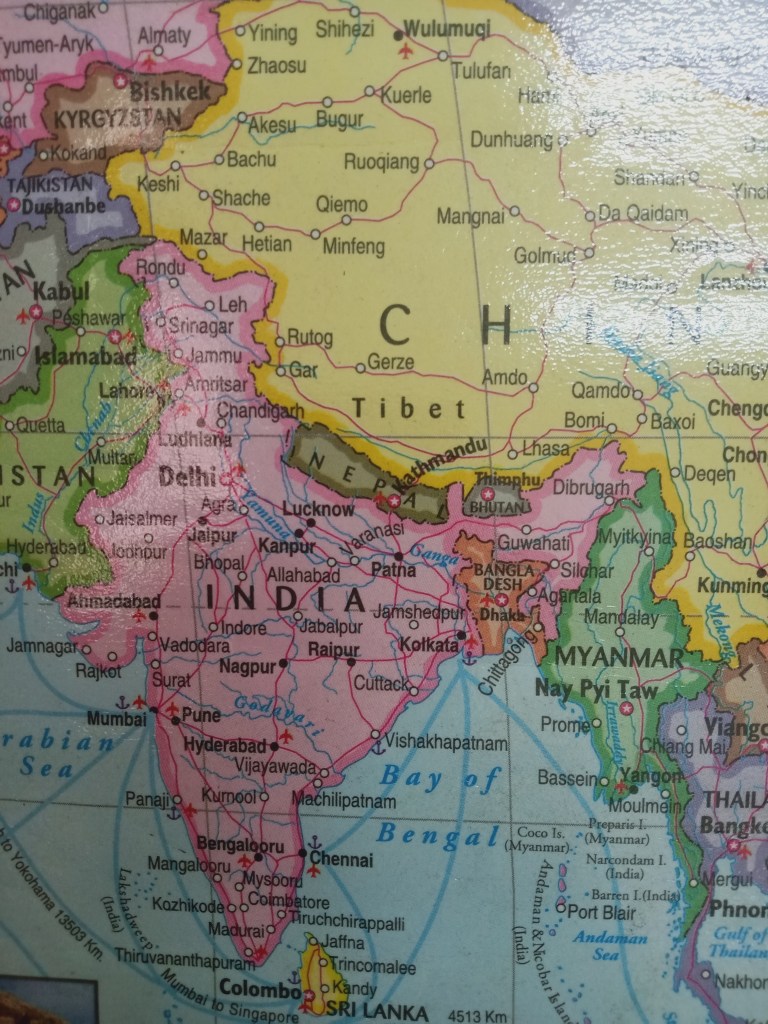
The Ministry of External Affairs strongly opposes the efforts of Mizoram government in providing asylum to refugees as India is not party to 1951 United Refugee Convention or its 1967 protocol. Devoid of national and international policies ,the recent influx of refugees will become the greatest diplomatic challenge for India as in the case of deportation efforts of Rohingyan refugees.
THE WAY AHEAD
The suppression of protests with an iron fist by the military regime is deplorable. Th U.S, U.K and European Union has imposed sanctions on military officials of Myanmar.
India being the largest democracy and the neighboring nation of Myanmar expressed its deep concerns on the massive bloodshed which occurred on Myanmar’s Armed Forces Day
The military regime seems to be unperturbed by the reactions from International community. Implementation of a peace plan expeditiously is an immediate requirement which can be attained only through diplomacy and dialogue process. The grave infringement of human rights even on children must be stopped. The world nations must join hands and should take efforts to restore democracy in Myanmar.India being the largest democracy and as a nation in South Asia can take up the role of mediator and initiate talks among the stakeholders.
 Thinkacademic